English - Writing
Our writing curriculum is designed to enable our children to become imaginative, engaging and precise writers who show control and adaptability in style.

ABOUT THIS CURRICULUM
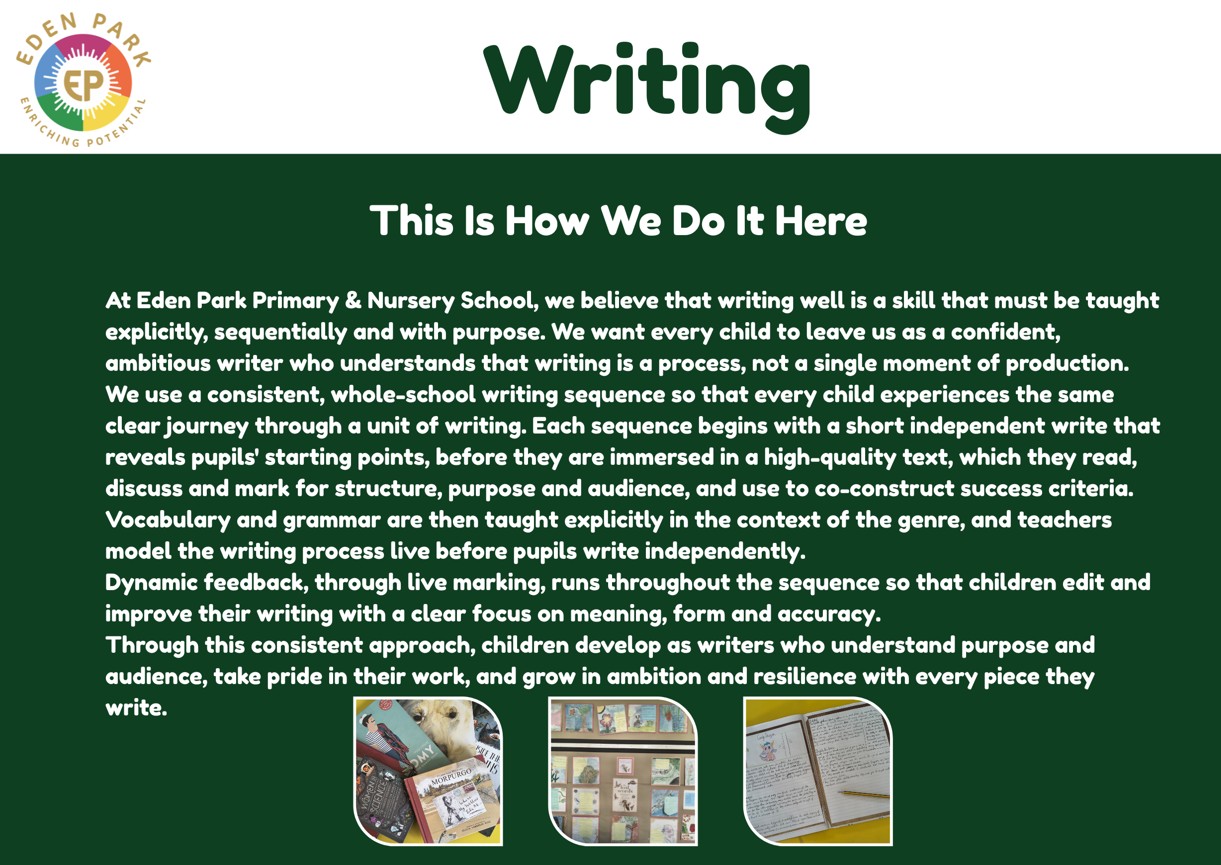
At the core of our curriculum is the belief that children should be taught using high-quality texts that vary in genre, show cultural diversity and are matched to the needs of individual classes of children.
By using this structure to shape our writing curriculum, the children are presented with a model which enables them to understand authors’ choices and intentions, demonstrating what an effective piece of writing looks like, as well as providing a solid understanding of grammar; this provides the children with clear end points and outcome pieces to work towards. Through teaching writing skills alongside these high-quality texts, children are shown how the choices that they make as a writer impact on the reader in differing ways.
Alongside this, talk is at the heart of every writing unit. Children read, discuss and act out the model text, so they understand how it works before writing their own. They learn new words by using them out loud in sentences. Before writing, they say their sentences aloud to hear whether they make sense. When the teacher writes live in front of the class, they talk through each choice they make. Children then give each other kind, specific feedback to improve their work. This builds confident speakers as well as confident writers.
Writing is taught explicitly, in line with the Department for Education’s Writing Framework. Teachers model the thinking behind every choice, and daily dictation and oral rehearsal help spelling, punctuation and handwriting become automatic, so children can focus on what they want to say.
This robust curriculum is taught with a logical progression of texts so that children can build on their prior learning in a systematic way to ensure that intended knowledge and skills are acquired.
The academic year of 2026/27 is Year B in our class cycles.
“Pupils show particularly strong attitudes to their learning. (the school has an) orderly and hard working atmosphere.” (Ofsted, 2023)
How we teach writing
Eden Park writing road map, showing the sequence of a writing unit from the bite-sized write to editing and publishing.
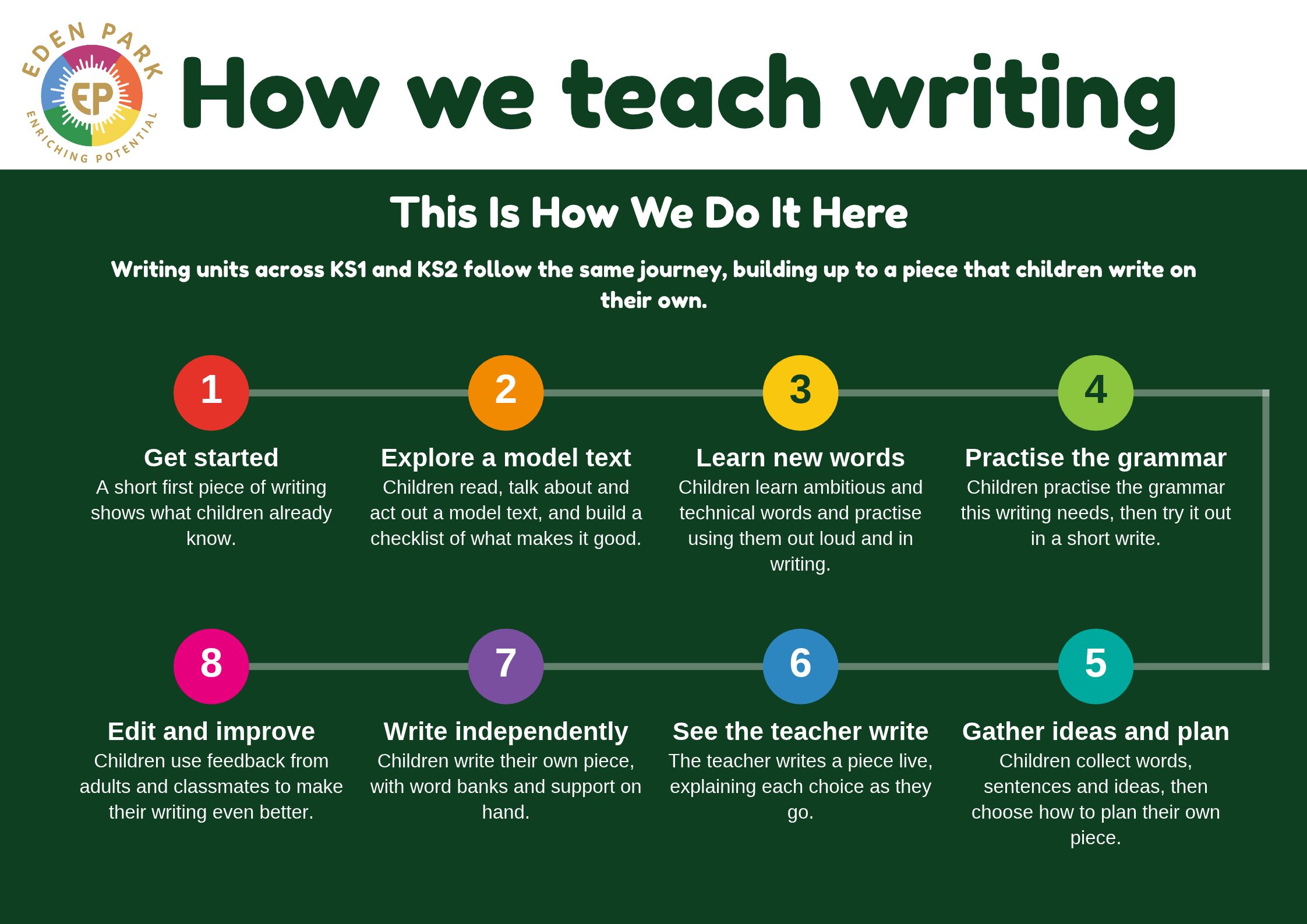
How we teach writing: an 8-step roadmap. Get started, explore a model text, learn new words, practise the grammar, gather ideas and plan, see the teacher write, write independently, edit and improve.
Each writing unit lasts two to three weeks and follows this sequence, from a short bite-sized write to a final edited piece.
Spelling and Handwriting
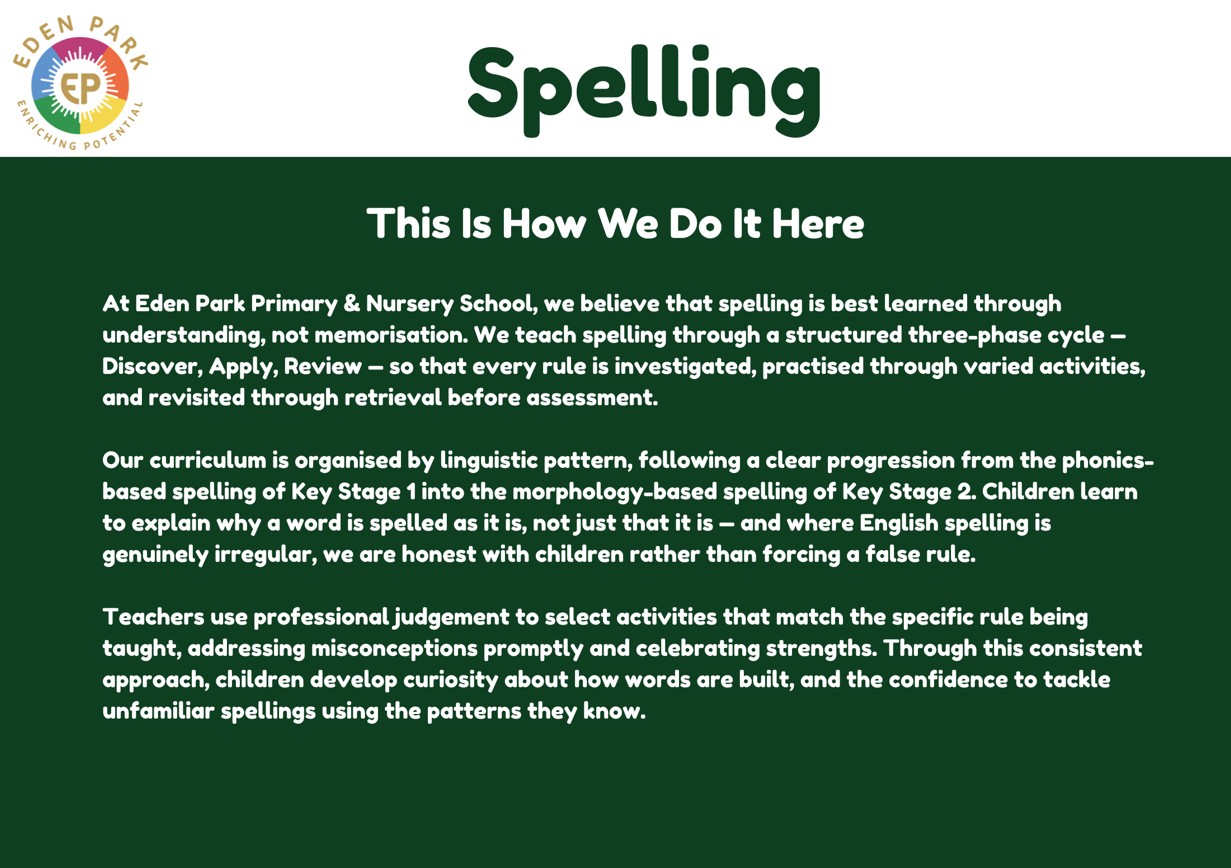
In Reception and Key Stage 1, children learn to spell through Read Write Inc. phonics. From Year 3, spelling is taught as its own subject. Each rule is taught in three steps: Discover (children work out the pattern), Apply (they use it, including on made-up “alien words”) and Review (they spot and correct mistakes). Children also learn the statutory word lists for their year group.
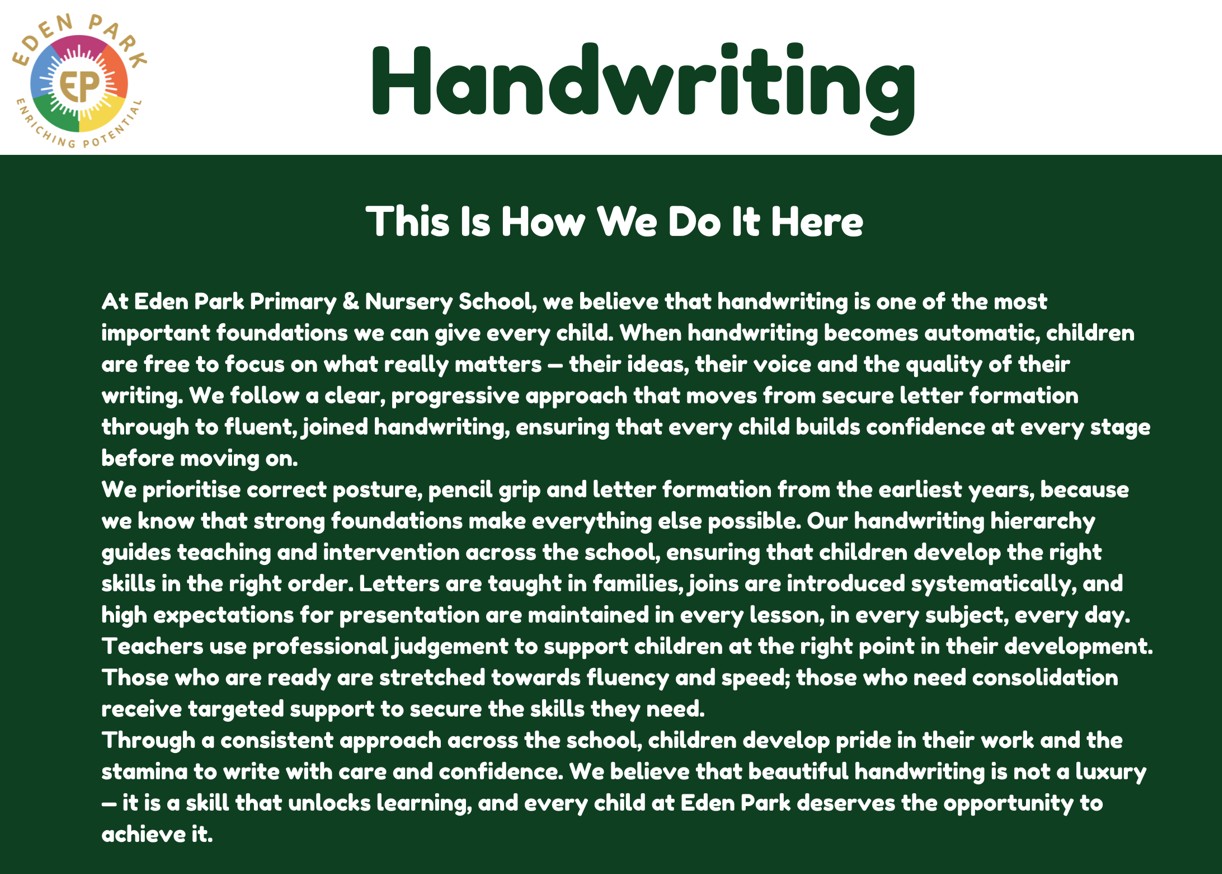
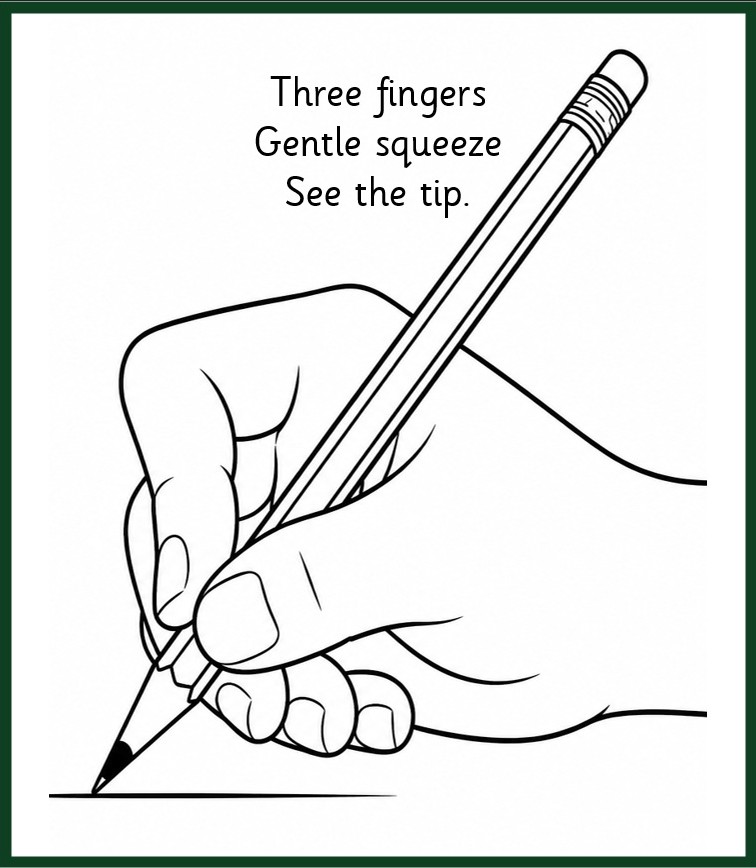
Handwriting moves from printed letters to joined writing, and children only move on when they are secure. By the end of Year 2, all five join types have been taught. In Key Stage 2, handwriting is practised through daily dictation, modelling and targeted support.
Writing in the Early Years

Writing starts long before children hold a pencil. In Nursery, children build strong hands and bodies through climbing, big painting, playdough, threading and tweezers. They make marks everywhere: in shaving foam, sand and flour, and on shopping lists and cards in their play. Talk, stories and rhymes come first, and Phase 1 phonics develops listening and sound awareness. In Reception, children follow Read Write Inc. Phonics every day. They learn to form letters correctly in small groups, write words using the sounds they know, and watch an adult model sentence writing daily. By the end of Reception, children write simple sentences that they and others can read, with capital letters, finger spaces and full stops, ready for Year 1.
How we adapt writing
We want every child to succeed as a writer. All children take part in the same unit, with the right support to get there. This might include word banks, sentence starters and picture prompts, learning key words before the unit begins, saying sentences aloud before writing them, or working with an adult in a small group. Some children record their ideas by typing, using voice-to-text, or with an adult scribing, so handwriting doesn’t hold back their ideas. Children who need it have extra handwriting and fine motor sessions, with pencil grips and sloped boards available, and left-handed children are taught their own grip. Our SENDCo works with teachers and families using the “Assess, Plan, Do, Review” cycle. Find out more on our SEND page.
How we check progress
Every unit begins with a short “Get started” write. This shows us what children already know and helps teachers plan what to teach next. During the unit, adults give feedback in the moment, so children can put things right while they write. The final independent piece is checked against the expectations for their year group. Each writing book has an evidence gathering grid showing your child’s writing targets, with the current target highlighted every half term. At least six times a year, teachers also give detailed written feedback with one clear next step. Teachers use all of this to decide who needs extra support or more challenge. You can read more in our Feedback Parent Guide.